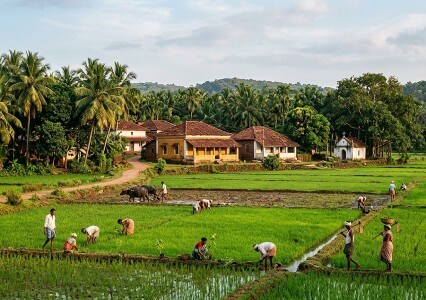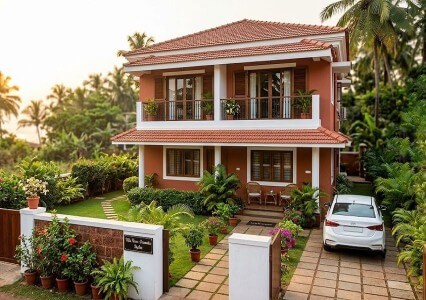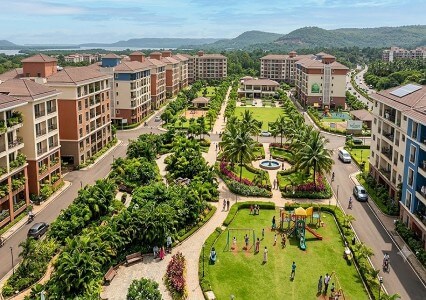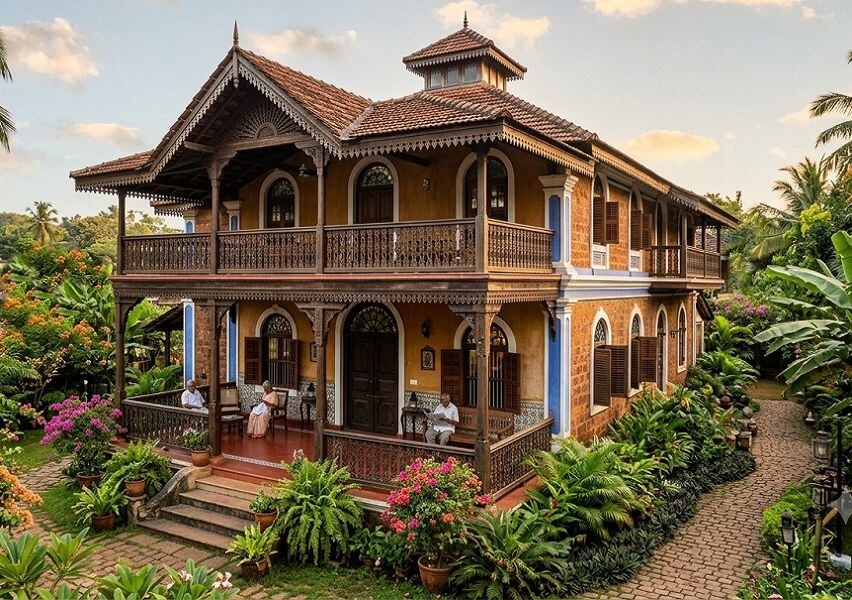
An authentic Indo-Portuguese Villa in Goa is more than an abode. It is an exquisite piece of art that has been designed out of years of creative virtuosity, centuries of trials n’ error, an unplumbed understanding of the state’s coastal climate and construction processes that reflects the state’s unique cultural ethos,
An Indo-Portuguese villa consists of walls, beams and windows just like all structures do – However what makes it unique is that it speaks a story of Goa’s expressive vernacular architectural traditions.
WHAT MAKES A VILLA "INDO-PORTUGUESE"?
The Portuguese Empire had a dominant presence in Goa for a massive 450 years and these Indo-Portuguese villas took shape through those 450 years of foreign rule. These villas are a perfect fusion of European architecture and Konkan building wisdom (usage of local stone, clay. Timber and lime). The result is an architectural design that is neither purely Portuguese nor entirely Indian.
It is a local style that was invented through place, climate and craft. If we look at old houses in Goan villages such as Chandor, Loutolim, Fontainhas and Divar, we will come across homes that are constructed with what the land provides and designed specifically to make them monsoon & summer-proof.
THICK LATERITE WALLS: THE ORIGINAL CLIMATE CONTROL:
- Laterite: It is a reddish, iron-rich stone that is found in abundance across the Konkan Coast. It is quarried in soft blocks that harden on exposure to air and has gained enormous popularity among locals in Goa.
ADVANTAGES OF LATERITE WALLS:
- THERMAL MASS: Walls made of laterite are close to two feet thick and absorb heat slowly throughout the day and release it slowly at night. The advantage is interiors stay cooler without an air-conditioner.
- LONGEVITY: The usage of laterite stone and lime in constructing of Goan homes leads to structures that stand the test of time for two or three centuries in Goa’s humid and salt-laden air
- SUSTAINABILITY: The most striking aspect of using laterite stone and lime in construction is its long-time positive impact towards the environment.
HIGH TIMBER CEILINGS: VOLUME, VENTILATION AND WARMTH: The striking feature of an Indo-Portuguese Villa is its height. In these villas, ceilings are a framework of hand-crafted timber beams and rafters. These ceilings are critical since they support a roof of clay tiles.
ADVANTAGES OF HIGH TIMBER CEILINGS
- STACK VENTILATION: Goa’s humid weather calls for innovative cooling techniques. Courtesy of these high ceilings, hot air rises and escapes near the roofline while cooler air flows from below. This is an innovative cooling method that acts as a alternative to modern engineering.
- CROSS-BREEZE: An Indo-Portuguese house is endowed with tall openings and ventilation gaps under the eaves that keep the air moving though the house. This is a blessing for Goa where summers are extremely warm.
- GRANDEUR WITHOUT EXCESS: The high timber ceilings add a touch of grandeur to these vintage homes without doing anything extravagant
- THE BALCÃO: THE HOUSE'S SOCIAL HEART: The balcao is the most striking feature of these heritage homes. It is an iconic characteristic of Indo-Portuguese homes. It constitutes a covered porch with built-in stone or masonry seating on either side of the entrance that faces the street
- A balcão is where elders relax in the evening over a cup of tea and chat with their neighbours and passers-by.
It also provides climatic benefits which are mentioned as below:
- Shade: A balcão consists of deep overhangs that keep direct sun and heavy rain off the main walls and windows.
- Transition space: It is a kind of buffer between the unforgiving outside heat and the cool interiors.
- Community: The balcão is a perfect symbol of an open, welcoming house and is in exact contrast to the closed, fenced-off homes of many modern developments.
OYSTER-SHELL WINDOWS: LIGHT LIKE NOWHERE ELSE: : An Indo-Portuguese villa consists of never-ending features with Oyster-shell windows being one of them. It uses thin, translucent slices of the windowpane oyster, set into small square wooden grids (often called carepa windows).
What makes them special
- DIFFUSED LIGHT: These shells are known to allow a soft, miky glow rather than harsh glare of the sun. This makes the rooms bright while keeping the temperature cool.
- Sliding shutters: Windows are equipped with sliding wooden frames and can be opened fully for breeze, especially after sunset.
- Craft heritage: There is a lot of creativity and artisanal expertise involved in designing these frames
WHY AUTHENTIC VILLAS ARE DRAWING INVESTOR ATTENTION?
Everyone talks about sea-facing homes in Goa. However, it’s the authentic Indo-Portuguese Villas that are also drawing attention among investors. Such homes cannot be replicated.
There are a limited number of such Indo-Portuguese villas which are available for investors to purchase. This scarcity is what makes these vintage properties desirable along with sea-view apartments and penthouses.
Such homes are made of antique materials, superior craftsmanship and are born out of years of research on “how to construct coastal homes that stay cool during summers?”. These villas offer a unique blend of lifestyle, cultural values and authentic Goan vibes.
Frequently Asked Questions
What is an Indo-Portuguese villa?
A traditional Goan home that blends Portuguese architectural elements, such as balcões, tiled roofs and ornate façades, with local materials and climate-responsive design.
Why are laterite walls used in Goan homes?
Laterite is locally available, strong and thermally efficient. Thick walls keep interiors cooler and cope well with heavy monsoon rains.
What are oyster-shell windows?
Windows glazed with thin, translucent pieces of windowpane oyster set in timber grids. They diffuse light softly and offer privacy.
What is a balcão?
A covered porch, usually with built-in seating, at the entrance of a Goan house. It offers shade, shelter and a place to socialise.
Final Word: Staying in an Indo-Portuguese villa is a unique experience in itself. Staying in one means being in tune with the very Goan ethos.
Disclaimer: This article is published by Poetree Homes purely for informational, educational, and architectural appreciation purposes. Poetree Homes specializes in modern residential apartments and commercial spaces and does not deal in, sell, or construct heritage Indo-Portuguese villas. All design insights shared here serve to celebrate the rich history and architectural heritage of Goa.